Buyer guide

Down payment assistance in Colorado

Cash for your down payment and closing costs, where it comes from, who qualifies, and what it costs you back.

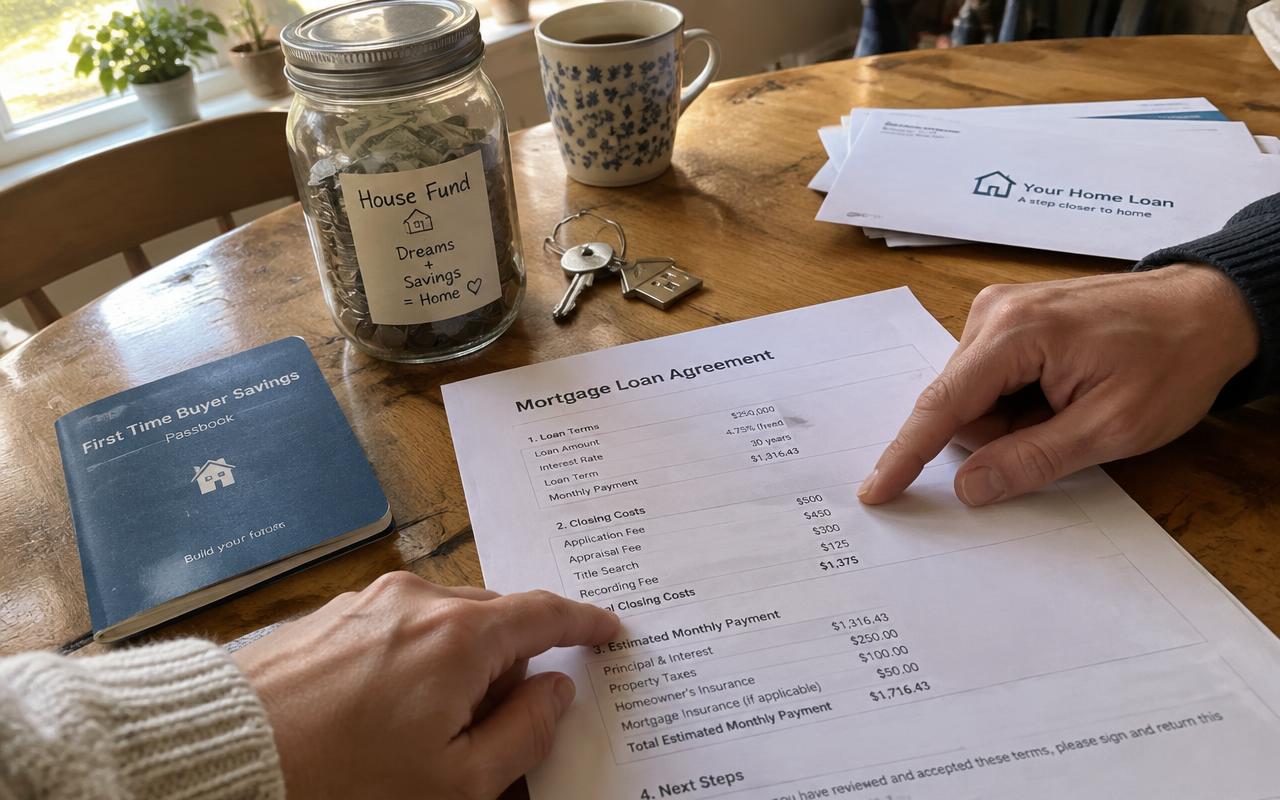
A house fund savings jar, house keys, and mortgage paperwork on a kitchen table while a buyer points to a line in the documents

The biggest myth in homebuying is that you need a twenty percent down payment. In Colorado, you do not. Down payment assistance exists precisely to bridge the gap between what you have saved and what the loan requires.

What down payment assistance actually is

Assistance is money that goes toward your down payment or closing costs, provided by a state agency, local government, or nonprofit. It usually arrives as a second loan or a grant that pairs with your main mortgage, so you bring little or no cash of your own to closing.

The three common structures: a grant you never repay, a forgivable second loan that disappears after you live in the home for a set number of years, and a repayable second loan with little or no interest that comes due when you sell or refinance.

CHFA down payment assistance

The Colorado Housing and Finance Authority pairs its first mortgage programs with assistance for the down payment and closing costs. Expect a homebuyer education class, and expect income and purchase price limits that update annually and vary by county.

CHFA loans are offered through participating lenders. As a broker we know which of our wholesale mortgage banks carry them, so you are not stuck calling around.

Metro and local programs

The Denver metro area runs its own assistance through metroDPA and Denver DPA, and neighboring communities have their own: Aurora HOAP in Aurora, DCHP in Douglas County, Adams County assistance across Thornton, Westminster, Northglenn, Brighton, and Commerce City, and El Paso County Turnkey Plus in Colorado Springs. Statewide, CHAC and the Chenoa Fund fill gaps, and a Mortgage Credit Certificate can add a yearly tax credit on top.

Program details change often enough that a list printed six months ago can mislead you. We verify what is currently available for your city, income, and price range before recommending anything. Our first-time buyer guide breaks each of these programs down one by one.

Who qualifies

Typical requirements: you will live in the home as your primary residence, your household income falls under the program's limit, the purchase price sits under the program's cap, and your credit meets the loan's minimum. Many programs do not actually require you to be a first-time buyer.

Limits change every year. The fastest way to know where you stand is to have us check your numbers against the current ones.

Common myths, cleared up

Assistance is not only for very low incomes. Many programs serve moderate income buyers who earn too much to be considered low income but not enough to save twenty percent on a Colorado salary.

It does not always have to be repaid. And using assistance does not ruin your pricing; the program's second loan sits behind your first mortgage, and we price the whole structure for you before you commit to anything.

How to apply

You apply for assistance through a participating lender at the same time as your main mortgage, so there is no separate application gauntlet. Start with a pre-approval, tell us you want assistance considered, and we will place your file with a wholesale bank that offers the programs you qualify for.

What buyers ask about assistance

Questions about your own numbers?

Call or text 720-386-4071, or start the application and we will follow up the same day. The conversation is free, and the math is yours to keep.

Chat Now