Buyer guide

First-time home buyer programs in Colorado

The programs, the down payments, and the honest fine print, written for people buying their first place in Colorado.

Reviewed by Ben Binger, Mortgage Loan Originator, NMLS 1322594

Last updated October 26, 2026

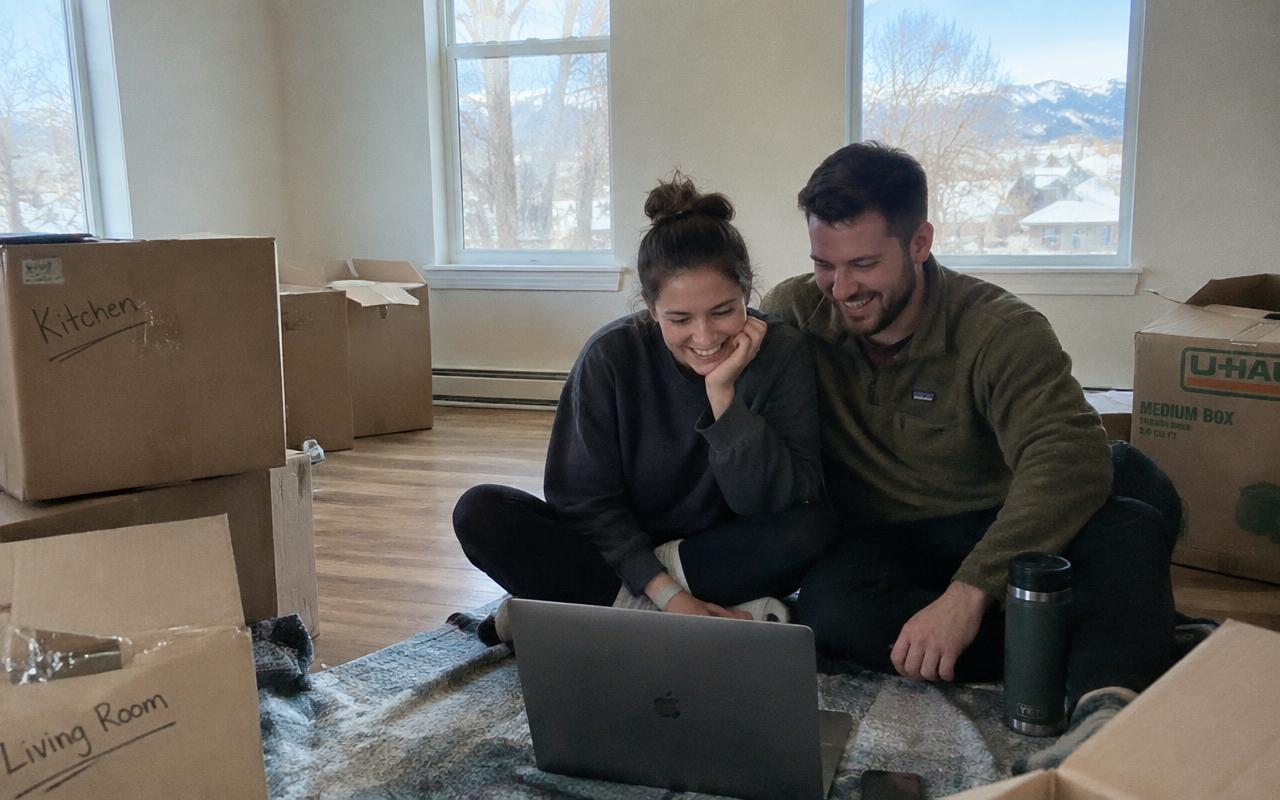
A young couple reviewing home loan paperwork on a laptop in the living room of their first Colorado home, moving boxes around them

Buying your first home in Colorado is very doable, and it rarely looks the way people expect. Most first-time buyers put down far less than they expect, and several state and local programs exist specifically to help with the cash to close.

This guide walks through the loans and assistance programs we use for first-time buyers every week, who qualifies for each, the path from pre-approval to closing, and the mistakes worth avoiding. Use the list below to jump to any part.

Who counts as a first-time buyer

Most programs define a first-time buyer as someone who has not owned a home in the last three years, so you can qualify again even if you owned a place years ago. Some programs add exceptions for veterans or for buyers looking in targeted areas.

If you are unsure whether you count, ask us. The answer changes which programs are worth pricing, not whether you can buy.

  • Most programs: No ownership interest in a principal residence during the past three years.
  • Exceptions: Some programs make exceptions for veterans, single parents who only owned with a former spouse, or purchases in targeted areas.
  • Not always required: Several Colorado programs, including some metroDPA and CHFA options, are open to repeat buyers too.

Your path from pre-approval to closing

Every first purchase follows roughly the same order. Knowing it ahead of time takes most of the stress out of the process.

  1. 1Talk it through: Share your income, savings, and goals. We explain your real monthly payment and cash to close before anything is pulled.
  2. 2Take a homebuyer education class: Many assistance programs require one, and it is worth doing early.
  3. 3Get fully pre-approved: We review income documents, assets, and credit, then compare loan options and assistance across our wholesale lenders.
  4. 4Shop for a home with an agent: Tour with a pre-approval letter that matches your comfortable payment, not just your maximum.
  5. 5Make an offer and go under contract: Your agent negotiates price, inspection terms, and any seller credit toward closing costs.
  6. 6Inspection and appraisal: The inspection protects you. The appraisal protects the lender. Both can lead to renegotiation.
  7. 7Underwriting and final approval: We gather any last documents, lock your terms, and reserve assistance funds.
  8. 8Closing: Review your Closing Disclosure at least three business days ahead, sign at the title company, and get your keys.

Loan options compared in plain words

Each of these can work for a first-time buyer. The right one depends on your credit, income, savings, service history, and the property.

LoanBest fitThings to know
ConventionalBuyers with solid credit and steady incomeLow down payment options exist. Monthly mortgage insurance applies with a smaller down payment and can be removed later.
FHABuyers rebuilding credit or with higher debtMore flexible on credit history. Mortgage insurance works differently and often lasts longer.
VAEligible veterans, service members, and surviving spouses$0 down with full entitlement and no monthly mortgage insurance. A funding fee applies unless you are exempt.
USDABuyers in eligible rural areas within income limitsNo down payment for eligible borrowers. Location and household income both have to qualify.
CHFAIncome-qualified buyers who want assistanceA CHFA first mortgage paired with CHFA down payment help. Requires a homebuyer class.

Program guidelines change. Confirm current requirements with us before choosing a loan.

Start with a low down payment loan

Start by comparing conventional, FHA, and, when eligible, VA financing. Each has its own credit, income, property, and mortgage insurance requirements. A first-time buyer program is not a substitute for mortgage approval.

These loans are the foundation. Assistance programs and seller credits stack on top of them, which is how buyers end up closing with a fraction of the cash they assumed they needed.

CHFA, Colorado's housing finance agency

CHFA assistance must be paired with a CHFA first mortgage. Eligible borrowers choose a grant or a second mortgage, not both. Homebuyer education and program-specific income, credit, and property rules apply.

Those limits change each year and vary by county, so the right question is not whether CHFA exists but whether your income and target price fit this year's numbers. We check that for you.

Metro Denver and local assistance

Several metro-area programs offer down payment help administered through participating lenders, some of it forgivable over time if you stay in the home. Cities and counties run their own versions, and employer or union programs show up from time to time as well.

Because we work with more than 70 wholesale mortgage banks, we can match you with lenders that offer the assistance programs you qualify for rather than the one menu a single bank carries. The directory below names the Colorado programs we see used most often.

How assistance combines with your first mortgage

Down payment assistance does not replace a mortgage. It sits alongside one. Usually you take a first mortgage from a participating lender and the assistance arrives as a grant or a second loan recorded behind it. Some programs, like CHFA, require their own first mortgage. Others, like metroDPA, work with specific first mortgage types through approved lenders.

That pairing affects your whole loan. Assistance can come with slightly different first mortgage pricing, its own income and price limits, and repayment rules that kick in when you sell or refinance. We price your scenario with and without assistance so you can see the trade.

Homebuyer education requirements

Most Colorado assistance programs, including CHFA, require a homebuyer education class before closing. Classes cover budgeting, credit, the loan process, and life as a homeowner. Some are online and some are in person, and a program may only accept certain providers.

Take the class early. Certificates are often valid for a set period, and finishing it before you shop means one less task once you are under contract.

Common first-time buyer mistakes

Most of these are easy to avoid once you know about them.

  • Shopping first: Touring homes before a full pre-approval leads to heartbreak and weak offers.
  • Only comparing price: HOA dues, metro district taxes, and insurance can change the payment more than the price does.
  • New credit: Opening a car loan or credit card during the process can change your approval.
  • Moving cash around: Large undocumented deposits need explaining. Ask before you transfer money.
  • Skipping the inspection: It is your best chance to learn about the home before you own it.
  • Ignoring repayment terms: Know when assistance has to be paid back before you choose it.

Ask for seller credits

In a balanced market, asking the seller to contribute toward your closing costs is a normal part of the offer, not a long shot. On the right property, a seller credit can cover a meaningful share of what you would otherwise bring to the closing table.

Your real estate agent negotiates the credit. We tell you exactly how much to ask for based on your actual cost to close.

What to do first

Get pre-approved before you tour homes. It takes income documents, asset statements, and a credit check, and it tells you what payment feels comfortable before emotions get involved. Most pre-approvals come together in a day or two.

Then we price your options side by side: with assistance, without it, and across loan types, with real numbers.

Timeline with assistance

Assistance adds a few steps, but it should not add months when you start early.

  1. 1Before you shop: Take the homebuyer class and get pre-approved with assistance in mind.
  2. 2Under contract: We reserve assistance funds and submit the program's documents.
  3. 3Underwriting: The first mortgage and the assistance are reviewed together.
  4. 4Closing: Both loans sign at the same closing, and the funds go toward your down payment and costs.

Compare assistance before you choose

Help at closing is only one part of the decision. Ask for an itemized comparison with and without assistance for the same home.

  • Grant: Confirm whether any repayment or recapture conditions apply.
  • Deferred second: Ask what happens when you sell, refinance, transfer the home, or pay off the first mortgage.
  • Forgivable second: Check occupancy and payment conditions; forgiveness is not automatic if those conditions are missed.
  • Total cost: Compare the first mortgage, second loan, closing charges, and expected ownership timeline.

What to confirm for your address

A mailing address is not always a city's legal boundary. Assistance eligibility follows the program's actual service area.

  • Location: Confirm city and county eligibility using the property address.
  • Household: Ask whose income is counted and which documents are required.
  • Education: Finish any required homebuyer counseling early.
  • Funding: Confirm that applications are open and funds can be reserved.
  • Property: Ask about condos, new construction, and occupancy rules before committing.

Colorado first-time buyer and down payment programs, one by one

Here are the programs Colorado first-time buyers ask us about most, what each one does, and where it applies. Program funds, income limits, purchase price caps, and eligibility rules are set by each agency and change during the year, so treat this as a map rather than a quote. We confirm current terms for your situation before you commit to anything.

CHFA (Colorado Housing and Finance Authority)

Statewide

CHFA is the state housing finance agency and the starting point for most first-time buyers. It pairs a first mortgage with down payment and closing cost assistance, offered either as a grant or as a second mortgage, through participating lenders.

Expect a homebuyer education class, an income limit that varies by county and household size, and a purchase price cap. Both figures are updated periodically, so the right question is whether your numbers fit the current ones.

metroDPA

Denver metro area

metroDPA serves participating Front Range communities through approved lenders. Its assistance is structured as a deferred second mortgage, not an unconditional grant. Review repayment triggers before deciding it fits.

You do not have to be a first-time buyer for every version of it, and income limits are set generously enough that many working households qualify. Occupancy of the home as your primary residence is required.

Denver DPA

City and County of Denver

Searching for Denver DPA? Start by distinguishing metroDPA from Denver's affordable homeownership options. The city also lists income-restricted homes offered below market price, which is different from cash assistance toward a market-price home.

Check the city's current affordable homeownership listings and the separate metroDPA requirements. Do not assume that every Denver home or buyer qualifies.

Aurora HOAP (Home Ownership Assistance Program)

City of Aurora

Aurora HOAP (Home Ownership Assistance Program) offers down payment and closing cost assistance for income-qualified buyers purchasing a home within the City of Aurora.

Because it is city funded, the money is limited and the rules are specific about the property location and household income. Ask early if Aurora is on your list.

DCHP (Douglas County Housing Partnership)

Douglas County

Buyers searching for Douglas County Housing Partnership (DCHP) assistance should verify current offerings with the administrator. Do not treat an older program listing as confirmation that funding is open in Castle Rock, Parker, Highlands Ranch, or Lone Tree.

Ask about the current application process, participating lenders, service area, and repayment rules before relying on assistance in an offer.

CHAC (Colorado Housing Assistance Corporation)

Statewide nonprofit

CHAC is a nonprofit that makes low interest second mortgages for down payment and closing costs to low and moderate income Colorado buyers.

It is often the answer for buyers who fall slightly outside another program's box, and it can layer with a conventional or FHA first mortgage.

Del Norte NDC

Denver and surrounding neighborhoods

Del Norte Neighborhood Development Corporation is a longstanding Denver nonprofit offering homebuyer counseling and assistance for income qualified buyers, with deep roots in northwest Denver.

Their counseling side is genuinely useful even before you are ready to buy, and we coordinate with their assistance when it fits your file.

Mortgage Credit Certificate (MCC)

Statewide, issued through housing agencies

An MCC is not cash at closing. It is a federal tax credit that returns a portion of the mortgage interest you pay each year for as long as you keep the loan and live in the home.

Because the credit is ongoing, an MCC can improve both your annual tax picture and, in some cases, the income used to qualify. There are income and purchase price limits, and it must be issued at the time of your loan, not afterward.

Pikes Peak Down Payment Assistance (formerly searched as El Paso County Turnkey)

El Paso County and Colorado Springs

El Paso County's current county resource is Pikes Peak Down Payment Assistance (PPDPA). If you found an older Turnkey program reference, check the current PPDPA page rather than relying on the old name or terms.

It works for conventional, FHA, and VA first mortgages with participating lenders, which makes it a strong fit for military families buying near Fort Carson, Peterson, and Schriever.

Chenoa Fund

National program available in Colorado

Chenoa Fund is a nationally available down payment assistance program run by a government chartered entity, structured as a second mortgage behind an FHA or conventional first.

Depending on the option and your income, the second is either repayable or forgivable after a set period of on time payments. It is a good backstop when local funds have run dry for the year.

Adams County first-time home buyer assistance

Adams County

Adams County's housing resource page is a starting point for buyers looking in Thornton, Westminster, Northglenn, Brighton, and Commerce City. A county resource listing does not mean a dedicated first-time buyer assistance fund is currently open.

Funding cycles matter here, so if Adams County is your target area, let us check availability before you are under contract.

Program availability, funding, income limits, and purchase price caps are set by each agency and can change at any time. Nothing here is a commitment to lend or an offer of a specific program, and eligibility is determined by the program administrator and the lender. Call or text us and we will check what is currently open for your income, credit, and target neighborhood.
What first-time buyers ask us

Questions about your own numbers?

Call or text 720-386-4071, or start the application and we will follow up the same day. The conversation is free, and the math is yours to keep.

Chat Now